We have compiled a list of manufacturers, distributors, product information, reference prices, and rankings for Sludge treatment equipment.
ipros is IPROS GMS ・ IPROS One of the largest technical database sites in Japan that collects information on.

Sludge treatment equipment Product List and Ranking from 4 Manufacturers, Suppliers and Companies | IPROS GMS

Sludge treatment equipment Product List

1~5 item / All 5 items

Displayed results

Next-generation SBR system "Misuzuki Batch Wastewater Treatment System"

Energy-saving and space-saving! A wastewater treatment system that enables increased processing capacity.

The "Misuzu-type batch wastewater treatment system" is a next-generation SBR (Sequencing Batch Reactor) system that has evolved from conventional batch activated sludge treatment. It enables an increase in treatment capacity by increasing the number of batches (e.g., from 1-2 batches to 3-4 batches). Additionally, it features automatic control for sludge interface management during the discharge process and DO management during the aeration process. 【Features】 ○ Energy-saving and space-saving ○ High-level treatment capabilities (denitrification, phosphorus removal) ○ Bulking prevention ○ Capacity enhancement ○ Labor-saving through automatic control (pH, DO, ORP, nitrate, sludge interface) For more details, please contact us or download the catalog.

  • Water treatment equipment
  • Wastewater/wastewater treatment equipment
  • Aeration/air diffusion equipment
  • Sludge treatment equipment

Added to bookmarks

Bookmarks list

Bookmark has been removed

Bookmarks list

You can't add any more bookmarks

By registering as a member, you can increase the number of bookmarks you can save and organize them with labels.

Free membership registration

Regarding sludge treatment in closed-loop recirculating aquaculture systems (RAS).

Solution using decanter-type centrifuge for large-scale land-based aquaculture facilities!

Introducing European examples that are leading in closed-loop land-based aquaculture (Recycling Aquaculture System). The solid matter removed by the filter is further reduced in volume. No chemicals (coagulants) are used, and the materials are compatible with salinity levels equivalent to seawater. High concentrations of sludge are separated without the use of drugs. Sludge is converted into fertilizer. The amount of sludge generated is calculated based on production volume (amount of feed), and equipment selection is made accordingly.

  • スクリーンショット 2022-10-18 101332.png
  • centrifuge
  • Sludge treatment equipment

Added to bookmarks

Bookmarks list

Bookmark has been removed

Bookmarks list

You can't add any more bookmarks

By registering as a member, you can increase the number of bookmarks you can save and organize them with labels.

Free membership registration

What is bulking? Causes of sludge not settling [Basic knowledge]

In the sedimentation tank, the sludge does not settle and overflows along with the supernatant... Its true nature might be filamentous bacteria that have proliferated excessively within the sludge?

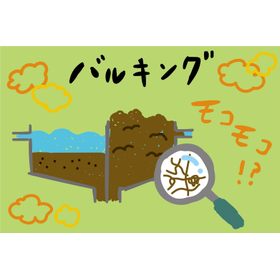
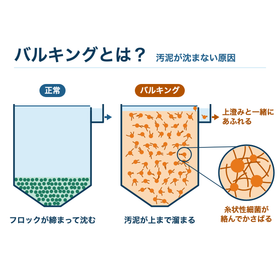
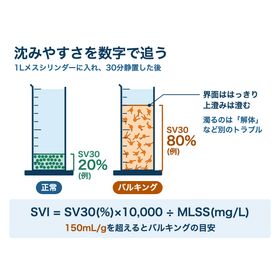
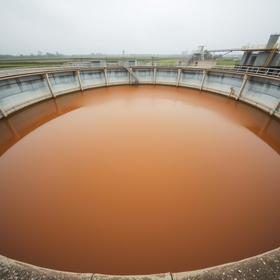
The phenomenon where activated sludge becomes difficult to settle in the sedimentation tank and overflows along with the supernatant is called "bulking." It is a problem in the activated sludge process where sludge and water cannot be separated. ■ Why doesn't it settle properly?! One of the main causes is the excessive growth of filamentous bacteria. When filamentous bacteria proliferate both inside and outside the floc, it forms a loose mass with many gaps, holding a lot of water. When the filaments extend outward, they entangle with each other during the settling process, hindering the compaction at the bottom. Even if the cohesive forces remain, it does not settle completely. ■ Why do filamentous bacteria increase? They are said to thrive under conditions with low oxygen and nutrients, triggered by changes such as: 1. Lack of dissolved oxygen (DO) 2. Insufficient nutrients like nitrogen and phosphorus 3. Operation with loads that are too low or too high 4. Inflow of wastewater rich in sugars or containing sulfides ■ Tracking settleability with numbers It is important to record and organize operational data and establish management benchmarks. SV30 and SVI are indicators that numerically represent the settleability of sludge. Please feel free to consult us first.

  • 001_main.png
  • 001_sub.png
  • 001_photo.jpg
  • Wastewater treatment equipment, technology and maintenance
  • Sludge treatment equipment and technology
  • Wastewater/wastewater treatment equipment
  • Sludge treatment equipment

Added to bookmarks

Bookmarks list

Bookmark has been removed

Bookmarks list

You can't add any more bookmarks

By registering as a member, you can increase the number of bookmarks you can save and organize them with labels.

Free membership registration

Comprehensive Catalog of Water Treatment Equipment and Chemicals - Over 40 Years of Technology Offered for Free!

A comprehensive catalog featuring devices and systems that contribute to water treatment solutions, from operation management to the construction of water treatment systems!

As an advanced management company for water and the environment, we coordinate water treatment systems suitable for various applications and support rational facility management. The comprehensive catalog of "Water Treatment Equipment and Chemicals" includes numerous water treatment systems, such as water treatment devices, sludge treatment equipment, and sand filtration and membrane filtration systems. [Contents Included] ■ Water treatment devices and components ■ Amenities-related products ■ Sludge treatment equipment ■ Sand filtration and membrane filtration systems ■ Environmental improvement and eco-friendly products ■ Water treatment maintenance management tools ■ Emergency water purification systems ■ Related products from the Crita Group ■ Water treatment improvement chemicals *For more details, please refer to the catalog or feel free to contact us.

  • Water treatment equipment
  • Sludge treatment equipment

Added to bookmarks

Bookmarks list

Bookmark has been removed

Bookmarks list

You can't add any more bookmarks

By registering as a member, you can increase the number of bookmarks you can save and organize them with labels.

Free membership registration

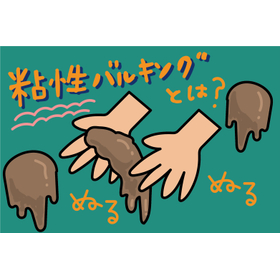
What is sticky bulking? Causes and countermeasures for slimy sludge.

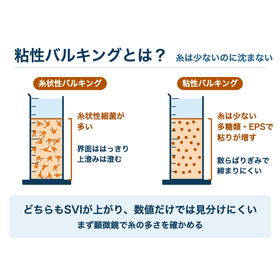
Why doesn't the sludge settle despite the low presence of filamentous fungi? This explains how to identify "viscous bulking," which is characterized by stickiness and lack of compaction, and discusses the drainage issues that can easily arise.

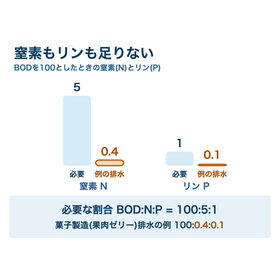
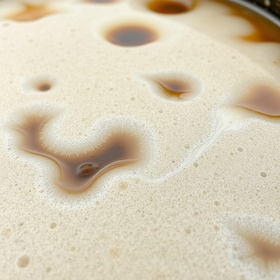
Viscous bulking is a phenomenon where activated sludge becomes sticky and difficult to settle. Bulking caused by filamentous bacteria has different causes and identification methods. ■ Few filaments, yet it won't settle! Even under a microscope, the filaments extending from the flocs are not very noticeable. Instead, undigested polysaccharides and EPS (extracellular polymeric substances) accumulate, increasing the stickiness of the sludge and causing it to become dispersed. As a result, it becomes difficult to settle in the sedimentation tank, and even when it does settle, it does not compact tightly. ■ What type of wastewater is it likely to occur with? It is believed to occur when treating wastewater that contains a lot of sugars with activated sludge. If nutrients like nitrogen are insufficient, the decomposition of polysaccharides may be delayed, or excessive EPS may be produced due to nutrient deficiency, leading to increased stickiness. In wastewater treatment at sake breweries, bulking with sticky foam has been reported, even though filamentous bacteria are few. ■ How to identify it? When it does not settle, first check the abundance of filaments under a microscope. If there are few filaments but it still does not settle, there is a possibility of viscous bulking. Also, check if the incoming water has sufficient nitrogen and phosphorus. Please feel free to consult us first.

  • 005_main.png
  • 005_sub.png
  • 005_photo.jpg
  • Wastewater treatment equipment, technology and maintenance
  • Sludge treatment equipment and technology
  • Wastewater/wastewater treatment equipment
  • Sludge treatment equipment

Added to bookmarks

Bookmarks list

Bookmark has been removed

Bookmarks list

You can't add any more bookmarks

By registering as a member, you can increase the number of bookmarks you can save and organize them with labels.

Free membership registration